Announcement

Collapse
No announcement yet.

3G9S

Collapse
X
 
  • Filter
  • Time
  • Show
Clear All
new posts
  •  

    3G9S

    3G9S Team will be active from Navarino Island, IOTA SA - 050, Chile.
    Team - Members of the Juncal DX.
    They will operate on HF Bands, including activity in various contests.
    They also planning to activate various POTA references.
    Information from their QRZ page:
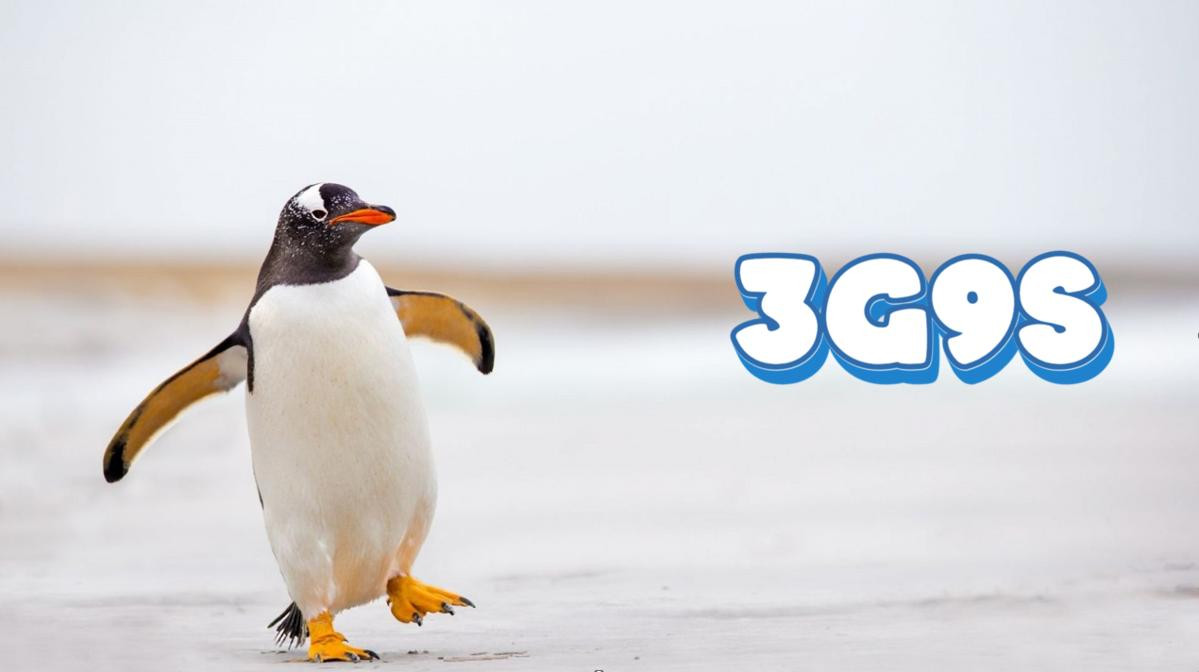
    The little penguin is named after Johann Reinhold Forster, the first scientist to describe them in 1781. The Papua penguin, scientifically known as Pygoscelis papua, is a fascinating species that mainly inhabits sub-Antarctic regions and some coastal areas of Antarctica. This penguin, easily recognizable by its distinctive plumage pattern, has a jet-black back and a white belly. One of its most notable features is the white stripe that runs from the eye to the back of the head, giving it a unique and elegant appearance. Gentoo penguins are migratory birds that adapt well to various marine habitats. They feed mainly on krill, fish, and squid, using their speed and diving skills to catch their prey. Their ability to dive to considerable depths makes them effective hunters. In terms of social behavior, these penguins tend to form large, noisy colonies, where they interact with each other through vocalizations and gestures. During the breeding season, pairs of Gentoo penguins build nests on rocky terrain and take turns incubating their eggs. Despite their charm and impressive adaptations, this species faces challenges due to climate change and ocean pollution, which affect their habitats and food sources. Conserving their environment is essential to ensuring the survival of Gentoo penguins and the balance of their ecosystems.

    3G9S Navarino Island
    73 Al 4L5A
  •  

    #2
    3G9S Navarino Island, Chile
    (Request for Operators)
    The meeting point is the city of Punta Arenas, Chile, from where a ferry departs to the city of Puerto Williams (approximately a 32-hour journey). The transportation company is called Tabsa and publishes the definite dates and times of departure 6 months in advance, so by the first week of August, the final date should be available. If they maintain what is scheduled until December, the probable departures are on January 1 or January 5. The ferry returns to the city of Punta Arenas 7 days later. (10 days in total of the trip to carry out the activity)
    The transportation cost is $300 dollars per person round trip + luggage.
    We are in the stage of coordinating details such as transportation from the seaport to the cabin round trip, food, water, among others. (we are looking for the most efficient and economical way to do it),
    The most challenging point so far is electricity since we will need at least a 3000 w generator (which has already been quoted on the island for a value of 30 dollars per day (250 dollars aprox total and the fuel will be about 350 dollars, but we need to figure out how to get it to the transmission site)
    The place to sleep will be the same where the radio station is, a cabin 100 meters from the sea that costs $25 dollars per night per person (beds, shower, hot water, heating, basic solar electricity for lighting, refrigerator included)
    he calls well be:
    3G9S (main call CE9 zone, POTA and WWFF)
    CB9N (remote operations, only valid for CE9 zone)
    XR9N Only test, early visit to the island if it is possible and, and during the trip
    for more info contact direct CE2PM.

    3G9S Navarino Island DX News
    73 Al 4L5A

    Comment

    •  

      #3
      3G9S News
      After dedicating ourselves to our jobs to get some time for our expedition, we’ve summarized preparations for the small activity at 3G9S. We already have our plane tickets from Santiago to Punta Arenas and the ferry transfer to Navarino Island.

      We already have the DXWorld-e 500W amplifier, and our Flex 8400 has also arrived, which we hope to configure so it can be used by radio amateurs around the world remotely. We still need to learn the configuration through Starlink, a new challenge.

      Soon we’ll be setting up and testing our main antennas, a BuddyHex and a DXCommander Expedition. We hope to manage to build a couple of wire antennas for the 30 and 80-meter bands. Being just two radio amateurs on the island, it will be a challenge to set up all the bands in a short time, but we’ll give it our best shot, and we’ll also try to build a line filter to keep the generator noise down. We’re hoping to test all our setup by the end of November or early December. The expedition is a new experience for us and we’re enjoying the preparations to the max.

      73 Al 4L5A

      Comment

      •  

        #4
        After dedicating ourselves to our jobs to get some time for our expedition, we’ve summarized preparations for the small activity at 3G9S. We already have our plane tickets from Santiago to Punta Arenas and the ferry transfer to Navarino Island.

        We already have the DXWorld-e 500W amplifier, and our Flex 8400 has also arrived, which we hope to configure so it can be used by radio amateurs around the world remotely. We still need to learn the configuration through Starlink, a new challenge.

        Soon we’ll be setting up and testing our main antennas, a BuddyHex and a DXCommander Expedition. We hope to manage to build a couple of wire antennas for the 30 and 80-meter bands. Being just two radio amateurs on the island, it will be a challenge to set up all the bands in a short time, but we’ll give it our best shot, and we’ll also try to build a line filter to keep the generator noise down. We’re hoping to test all our setup by the end of November or early December. The expedition is a new experience for us and we’re enjoying the preparations to the max.
        CE2PM
        73 Al 4L5A

        Comment

        •  

          #5
          3G9S News
          We’re just a few days away from our little project, and there’s still a lot to do.

          We’ve acquired a small 2kW inverter generator and hope we won’t have any problems with air transport. We’ve decided to build the line filter according to the GM3SEK model, for which we already have all the materials, including the ferrites purchased from Mouser. We plan to assemble it during the last week of December.

          We’ve also built an end-fed antenna with a 1:64 balun for 80 meters, which we won’t be able to test before traveling, but believe it will work.

          We haven’t been able to activate our Starlink Mini due to the high cost and demand where we live, so we’ll activate it upon arrival on the island (we need to keep costs as low as possible).

          Still need to test our small 100W amplifier for the IC705 and the power adapter for the Huawei 4850G2 power supply; our amplifier depends on these tests.

          We received a donation of high-quality thermal clothing from Cristian’s employer, for which we are very grateful. We’ve been checking the weather forecast, and we’re expecting temperatures between 3° and 10°C with a 90% chance of rain (it looks like we’re going to get wet) and winds of around 15 km/h. We hope our ferry trip will be pleasant. Both Cristian and Miguel are currently on their respective shifts at their mining jobs, so we’ll only have a few days to finish everything, pack our gear, and begin the long journey to Navarino Island.
          73 Al 4L5A

          Comment

          •  

            #6
            3G9S from Navarino Island, Chile on 14235 now.
            73 Al 4L5A

            Comment

            •  

              #7
              3G9S from Navarino Island, Chile on 21074 now FT8.
              73 Al 4L5A

              Comment

              •  

                #8
                3G9S from Navarino Island, Chile on 21274 now SSB.
                73 Al 4L5A

                Comment

                •  

                  #9
                  3G9S from Navarino Island, Chile on 28400 now.
                  73 Al 4L5A

                  Comment

                  Working...
                  X