FO/JI1JKW will be active from Tikehau and Tuamoty , IOTA OC - 066, 2 - 6 January 2026.
He will operate on 40 - 6m, SSB, CW , FT8 and also QO - 100.
Recent DX Spots FO/JI1JKW
QSL via home call, LOTW.
Previous activity:
Hiro, JI1JKW will be active as FO/JI1JKW from Fakarava Atoll, Tuamotu Archipelago, IOTA OC - 066, 23 - 26 December 2018.
He will operate on 40 - 6m CW, SSB, FT8.
QSL via home call.
Ads for direct QSL:
HIROYUKI SAITO, 4-30-14, EDAHIGASHI, TSUZUKI-KU, YOKOHAMA-CITY, KANAGAWA, 224-0006, Japan.
DXCC Country - French Polynesia, FO.
Fakarava - a coral ring of happiness
Fakarava Atoll is one of those few places on Earth that are commonly referred to as paradise. It seems to have been created for a peaceful vacation - both the climate and the surrounding nature contribute to this. This paradise is located not far from Tahiti, 560 km to the northeast. The atoll is rectangular in shape, with a lagoon covering an area of 1,153 square kilometers in the center and a small land area of only 16 km2. The administrative center of the island is in the northeastern part, near the Ngarue Pass, where the village of Rotoava is located, which has an airfield. The second largest settlement on the island, by local standards, is Tetamanu. It is here that the Catholic church, one of the first to be opened on the atoll in 1874, stands.
It should be noted that the Fakarava Atoll is included in the list of many lands, islands, and other geographical discoveries made by Russian explorers. The first European to discover it was Bellingshausen in 1820, when the island was still called by its old name, Farea or Havaiki. It was he who discovered this beautiful atoll in the vastness of the Pacific Ocean, surrounded by a large number of motu, tiny islands, many of which remain unexplored to this day.
But although the Russians were credited with discovering the island, it was quickly taken over by French colonizers, and to this day the atoll is part of French Polynesia, which became known by this name in the second half of the 19th century. This territory is governed by a high commissioner, who is still appointed by the president of France. Since 1946, all residents of French Polynesia, an overseas territory of France, have been recognized as citizens of this European country.
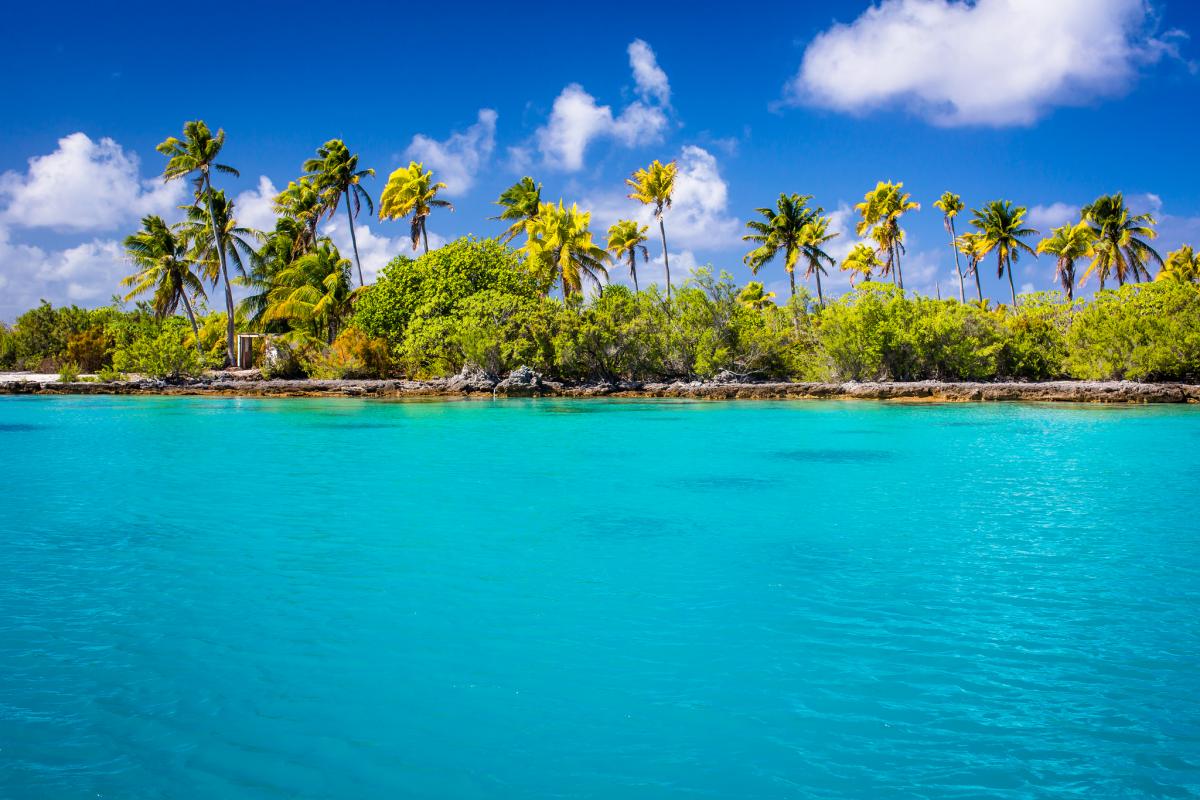 Fakarava Atoll, Tuamotu Archipelago, French Polynesia. Author - Eole Wind.
The gentle tropics – a vacation destination for any season
This paradise has a tropical climate that is mild and comfortable, ideal for tourism. From November to March, the island is warm and humid, while from April to October, there is little rainfall and the weather is dry and cool by local standards. The lion's share of annual rainfall occurs between November and March. The average annual temperature is 27°C. The average water temperature in the lagoon is just one degree lower, at 26°C.
Pristine nature is the main reason to visit here
Fakarava has an extremely rich ecosystem. It is no coincidence that it and six neighboring islands have been declared UNESCO protected reserves. Its remoteness from world civilization and its small size – as we have already mentioned, the island is not large – have allowed the island's biosphere to remain untouched and preserve its pristine state. This now allows tourists from all over the world to fly here and enjoy the beauty and diversity of the local nature.
Divers have also taken a liking to this place—the underwater nature of the atoll is as beautiful and rich as the land. And to observe the life of the underwater inhabitants, you don't have to be an experienced diver and descend to great depths. The water in the lagoon is so clear that even just swimming with a mask and snorkel, you can see many interesting things and admire the underwater landscape. You will see glowing coral “thickets” of impressive sizes and fish of all sizes darting back and forth, painted in all the colors of the rainbow, unhurried important stingrays, various crustaceans, and sea cicadas. You may encounter frequent visitors to these parts underwater - tiger sharks and hammerhead sharks, so don't forget to be careful. The fauna of the atoll is represented by various species of tropical songbirds, some of which are very rare. These include the particularly rare hunting kingfisher.
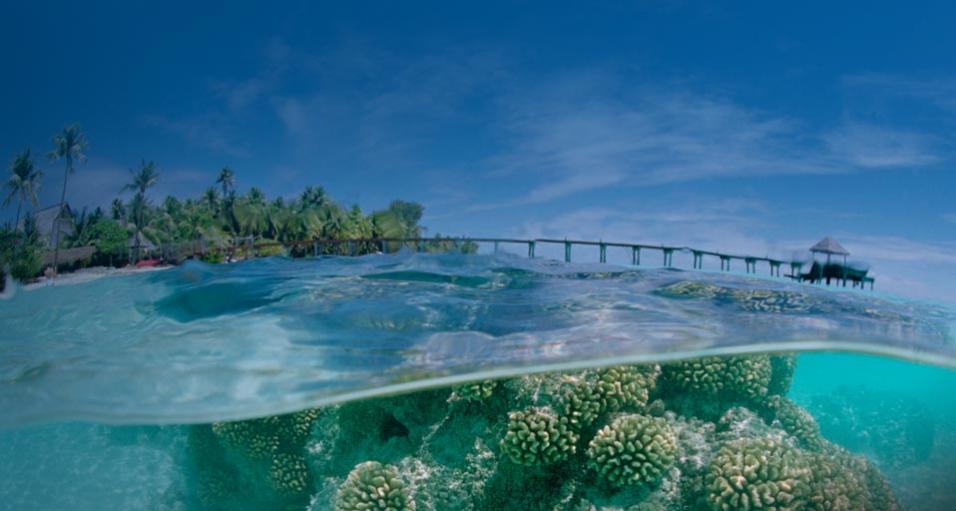 Fakarava Atoll, Tuamotu Archipelago, French Polynesia. Author - Eric do Rêgo Barros.
The landscapes of Fakarava are inspiring
You can admire the beauty of the lagoon from the shore, lying on the clean white sand under a Tuamotu palm tree (they grow all along the coast). You will be delighted by the breadth and diversity of the range of shades that color the water, and their variability and dynamism. It is known that the blue shades of the Fakarava lagoon became dominant in many paintings by the French artist Matisse, who visited here and Tahiti at one time — he spent three whole months in Polynesia.
There are few architectural monuments here, which is not surprising given the small size of the island and the presence of only two more or less large settlements. However, in the village of Tetamanu, you can see an early Catholic church, built at the end of the 19th century from a material that is exotic to us—coral. It was erected by early European missionaries and miraculously escaped destruction, remaining in good condition to this day. The stone Topaka lighthouse in Rotoava, which is 14 meters high, may also be of interest to tourists.
What the population of Fakarava does
A little over 800 people live here. They work mainly in the production of copra, from which coconut oil is subsequently extracted industrially. Part of the population is engaged in pearl fishing – some hunt for natural pearls, while others cultivate them on a special farm. This farm is open to tourists, which provides additional income for the owner. There is another exotic industry here: the island grows sea cucumbers. This slug is highly prized by gourmets in Asian countries, who pay well to enjoy its taste. There is an entire farm dedicated to its cultivation on Fakarava, as well as a smokehouse set up specifically for processing sea cucumbers. Neither has any problems with sales.
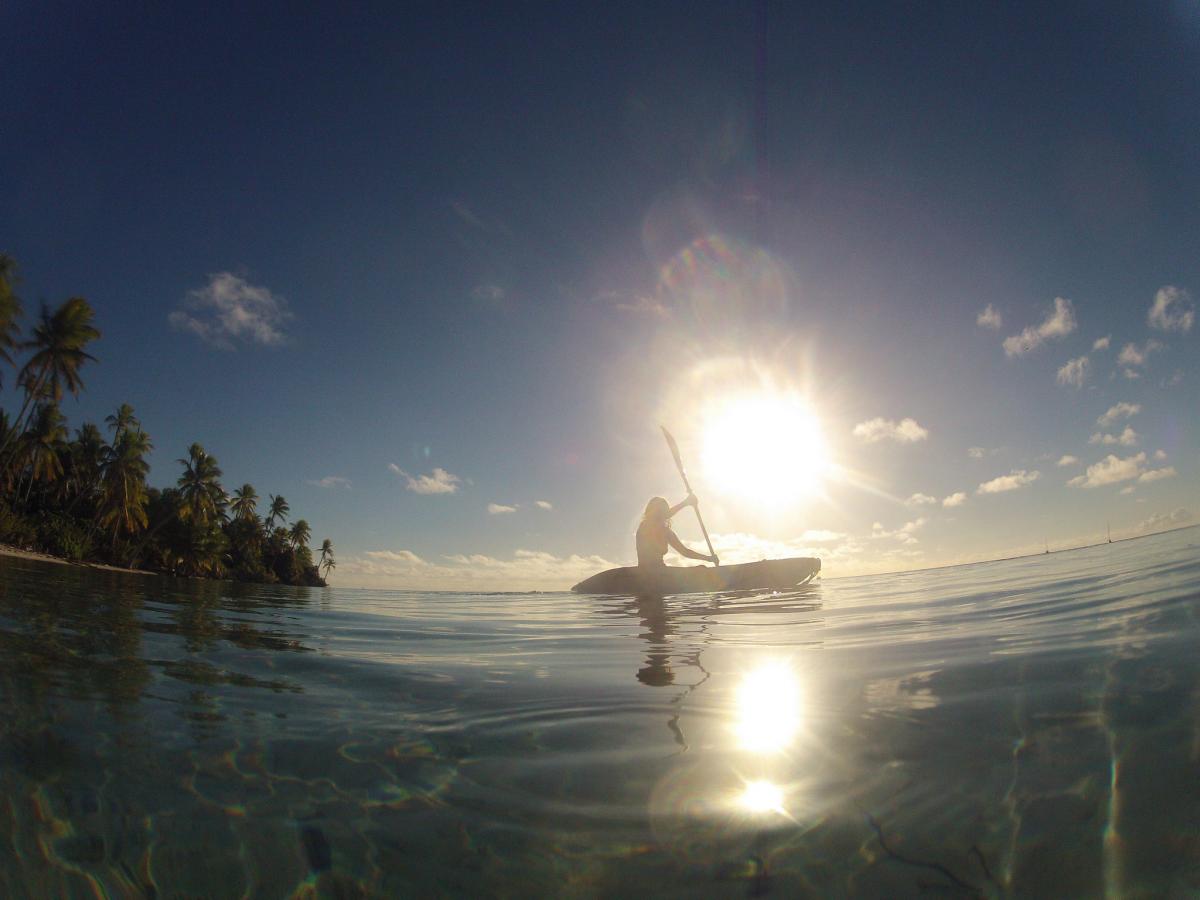 Fakarava Atoll, Tuamotu Archipelago, French Polynesia. Author - Zack Kruzins.
Tourism – a promising sector of the local economy
Until recently, tourism on the island developed at a snail's pace because travelers had great difficulty reaching this remote corner of the Pacific Ocean. But in 1995, the situation changed when an airfield was built in the administrative center of the atoll, the village of Rotoava. This made it much easier to get to the island, thanks to which the tourism industry turned its attention to this place and began to create the infrastructure necessary for a comfortable stay.
This place has become a favorite among divers. Here, in the Garua and Tumakonuha passages, there is a diving spot that is considered one of the best in the world. Even experienced divers are thrilled by the narrow underwater valley located in the Tumakonuha Pass. It is called “Charles Shark” and is home to many rare fish and even sharks. For extreme sports enthusiasts, diving in the valley is a great way to get their adrenaline pumping. Beach lovers will also be satisfied with the trip—anyone will be captivated by the classic combination of a clean white beach framed by tall emerald palm trees that shield you from the scorching sun and a huge lagoon with the clearest blue water.
There are not many places for travelers to stay on the atoll. Detached bungalows and guest houses, where you can rent a comfortable room, are mainly located in Rotoa. A trip here cannot be called a budget vacation, but every year the flow of people wanting to get away from the concrete jungles of big cities is growing. Not so long ago, it was difficult to meet even one Russian here, but today the picture is changing. More and more of our compatriots, tired of vacationing in Turkey and Egypt, are looking for wild, pristine exoticism. And there is plenty of it on the Fakarava Atoll — the island will not disappoint even the most daring expectations.