VP9I Team will be active from Bermuda Islands, IOTA NA - 005, in ARRL DX CW Contest, 21 - 22 February 2026.
Team - K3TEJ, AB2E.
Recent DX Spots VP9I
QSL for VP9I via WW3S.
Previous activity:
Jeff, N6GQ will be active as VP9I from Bermuda Islands, IOTA NA - 005, in CQ WW DX SSB, 30 - 31 October 2021 and in CQ WW DX CW Contest, 27 - 28 November 2021.
He will operate in Single Operator All Band Low Power Category.
QSL via WW3S.
Ads for direct QSL:
JAMES S TOLBERT, JR, 21986 RUSSET DR, MEADVILLE, PA, 16335, USA.
Bermuda
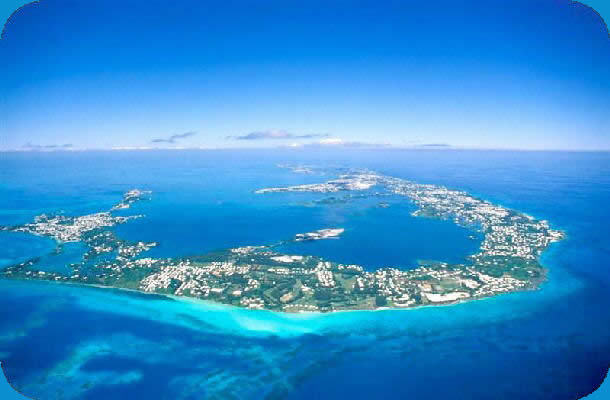
Bermuda is located in the northwestern Atlantic Ocean, 900 kilometers from North America. This territory has the official status of a British overseas territory and consists of 180 islands and reefs. Most of the islands belonging to this archipelago remain uninhabited to this day, with only twenty of them inhabited. A group of ten islands is connected by bridges and overpasses and united into one large island, Main Island. The area of the Bermuda Islands is 53.2 square kilometers
The first colonists and early history
The discoverer of the Bermuda Islands was Juan Bermúdez, a Spanish navigator. It was he who, in 1503, revealed to the world the archipelago that still bears his name. For unknown reasons, the Bermuda Islands did not attract the interest of Spain, and the first colonists appeared here much later—in 1609, the first settlement was founded here. Its owners were English navigators who were heading to Virginia but suffered a shipwreck. The captain of this ship was Admiral George Somers, so for some time the islands were named after him.
The first colonists engaged in agriculture. As in all other British colonies, African slaves were the main labor force on the islands. But Bermuda, surrounded on all sides by the Atlantic Ocean, could not boast of fertile soils, and slavery was abolished in 1838. As a result, 154 years after the official start of colonization, agriculture had to be abandoned. At the end of the 19th century, the economy of the Bermuda Islands completely changed its “specialization,” and tourism became the main source of income.
After the abolition of slavery, a significant part of the “masters” were unable to adapt to these islands and returned to their homeland, but the former slaves, who had become accustomed to hardship and difficulties during their years of slavery, remained here and even managed to establish a decent life. Of course, all this did not happen immediately. Over the years, the Bermuda Islands became a location for a British naval base, and later a US naval base, and a staging ground for the transfer of military forces during World War II, but fortunately, all this is now in the past.
Today, the Bermuda Islands are known as a welcoming resort that welcomes guests all year round. Thanks to the Gulf Stream, which passes nearby, there are no significant temperature fluctuations here, and even in the coldest months, the temperature does not drop below +14 degrees Celsius.
“Because without water, you can't go anywhere...”
The Bermuda Islands are of volcanic origin. The soil is porous limestone with a complete absence of large rivers, lakes, and other sources of fresh water. Of course, the age of new technologies has reached these paradise islands, and the wealthiest residents have managed to purchase water desalination plants, but such a luxury is only available to the select few. The inhabitants of Bermuda are not accustomed to despair (their ancestors adapted to even worse conditions) and have come up with a very interesting way to “extract” fresh water. When you arrive on the islands, you will be surprised and delighted by the roofs of most of the buildings: regardless of the size of the houses, their “status” and other external factors, each of them is crowned with a ribbed, stepped roof of an intricate shape. Such structures are used to collect rainwater, which flows down gutters and curves and goes straight into water collection tanks located under the houses. It is not known who came up with this ingenious idea, but thanks to this person, the islanders have one less problem in their lives.
In addition, all the houses on these islands have white roofs. The buildings themselves look quite monumental: thick and sturdy walls are designed to protect the owners not from the cold, which does not exist here at all, but from hurricane-force winds.
English heritage in the middle of a tropical paradise
Most of the inhabitants of the Bermuda Islands are descendants of those very African slaves who chose this place as their home after the abolition of slavery. Although most of the colonizers returned to their homeland after the abolition of slavery, some of them remained. As a result, the culture of modern Bermuda is a surprisingly harmonious combination of seemingly incompatible elements.
The British influence is particularly noticeable in government institutions: judges still wear powdered wigs, police officers do not carry weapons, Golf and cricket are the most popular sports, and in the evenings, every local connoisseur heads to the nearest bar for a pint of beer, because “five o'clock,” which came here from Great Britain, has become a “sacred” and beloved tradition.
Walking through the streets of the islands, you will notice that there are no sidewalks here (with the exception of the central streets of the capital). The roads here are so narrow that two cars can barely pass each other. Until recently, there was even a law prohibiting driving at speeds above 25 miles per hour (32 km/h), but this ban has long since ceased to apply.
The red mailboxes and red telephone booths located in the most unexpected places look particularly unrealistic. These magnificent attributes, reminiscent of Britain, seem to have come here as visitors but decided to stay forever.
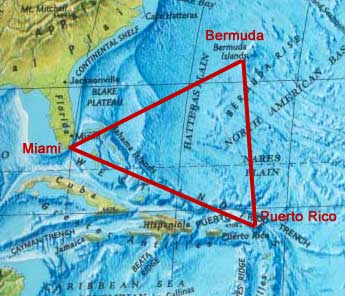
Secrets of the Bermuda Triangle
The Bermuda Islands are always blue skies and bright turquoise seas, always hospitable residents who greet even those they see for the first time on the street, and 365 days of warm and comfortable summer. But no fairy tale is complete without secrets and mystical mysteries, and the Bermuda Islands are no exception.
The phrase “Bermuda Triangle” has long been a household name and has gained a bad reputation. Ships, planes, and even individuals disappear here, and each such story is surrounded by a mystical aura that remains unsolved to this day.
Of course, local activists could not ignore this fact, and tourists come here not only to take a break from the hustle and bustle of everyday life, but also to see a piece of this mystery with their own eyes and touch it. The most daring travelers even venture to the borders of the Bermuda Triangle. This chilling attraction is not for everyone, but boat and yacht owners have no shortage of willing participants.
Things to do on the islands
What to do on the islands? Relax, of course! Fancy hotels, each with a homey vibe, are right on the coast. Warm, clear water in incredibly rich shades, coral reefs, trips to nearby islands, excursions to remote villages where you can see the real, unstaged life of an ordinary family with your own eyes.
Snorkeling, diving, sailing, music festivals — every guest will find entertainment to suit their tastes and budget.
What to bring home from Bermuda? Of course, fantastic souvenirs and handmade crafts created by local artisans. Each of these items, which can be purchased at local markets, is a work of art.